
Under-Stairs Storage
Under-Stairs Storage Ideas for Hertfordshire Homes
Under-stairs storage is one of the quickest ways to make a hallway feel calmer and more useful. The right design depends on the staircase angle, the hallway width, the depth of the void, and what the family actually needs to hide away.
Key takeaways
- The best layout depends on depth, hallway width, stair angle, and what you need to store.
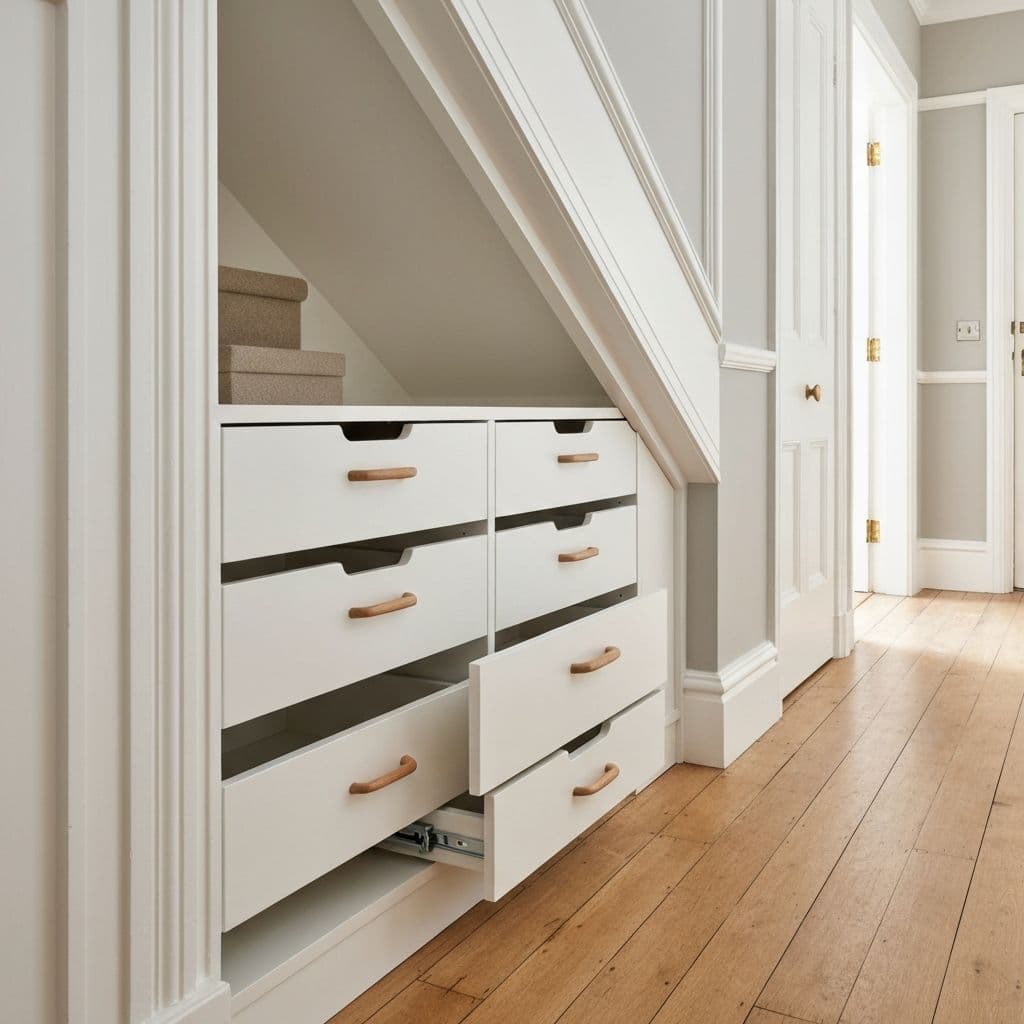
- Cupboards are simple and tidy, while pull-out drawers can make deep voids easier to use.
- Good under-stairs work should protect hallway access and look settled into the existing staircase.
Visual References
Details to look for before you brief the work
Finished
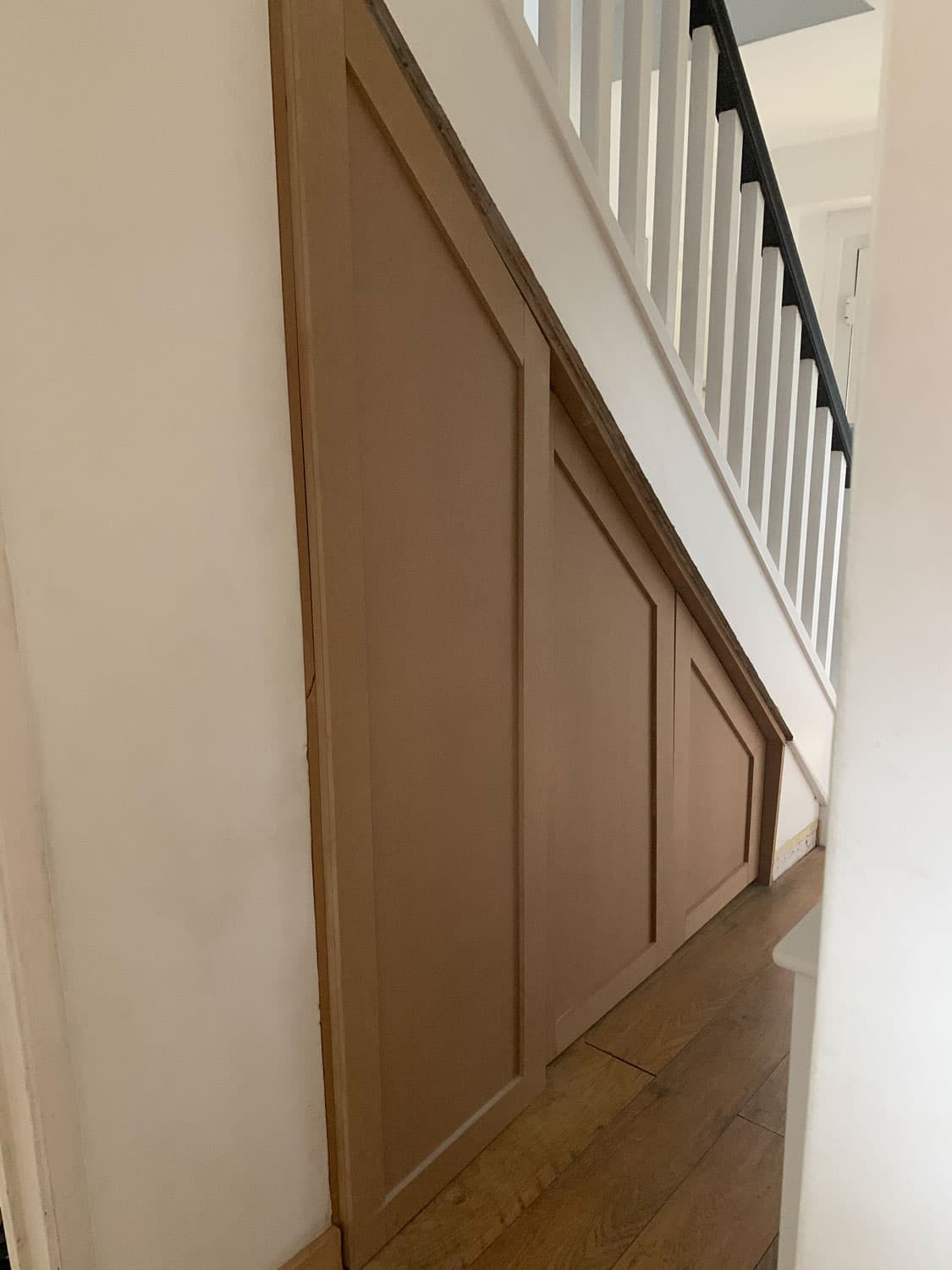
Under-Stairs Panel Storage
Panelled under-stairs storage doors built into the staircase run for a practical hallway finish.
Detail
Under-Stairs Cupboard Reference
Storage reference for planning cupboard access, stair angle, and hallway circulation.
Detail
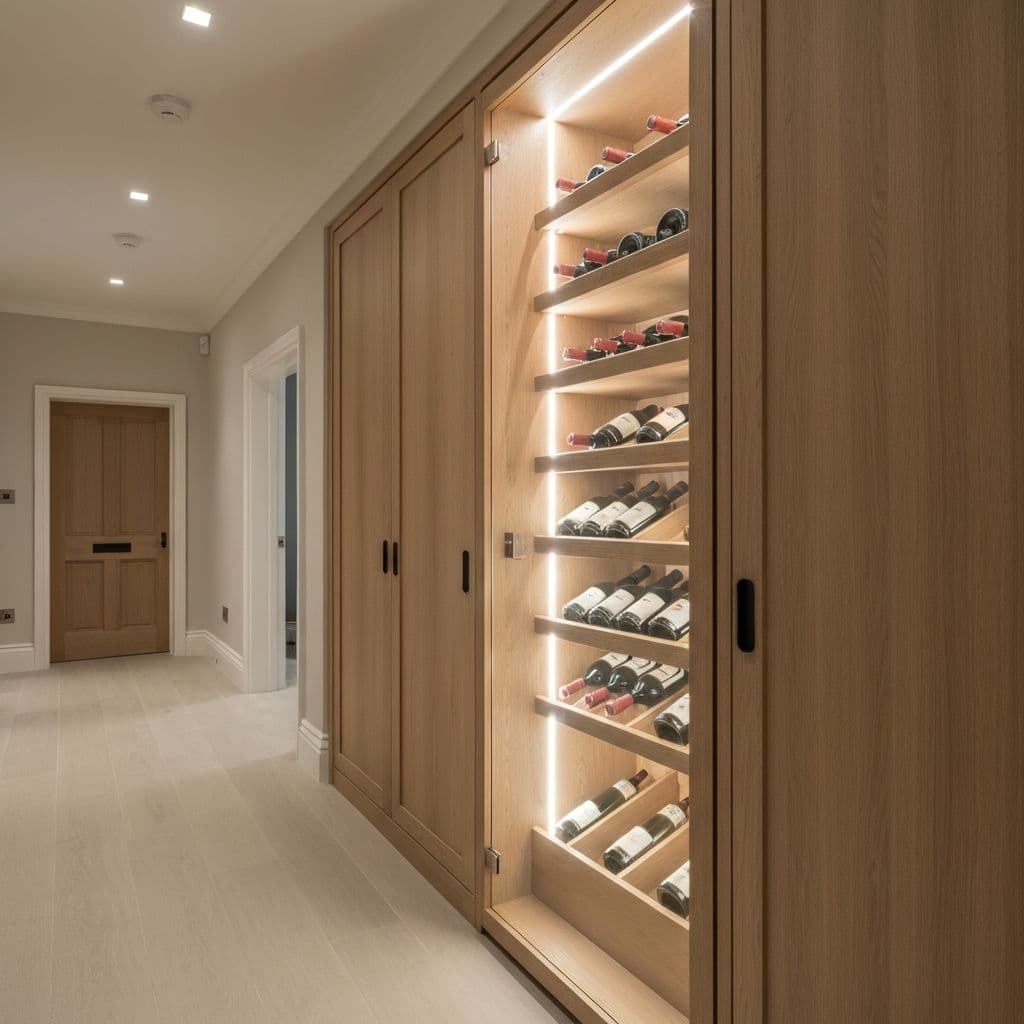
Built-In Storage Detail
Storage detail showing how built-in carpentry can keep useful space tidy and accessible.
What the space can realistically hold
Every under-stairs space is different. Some have enough depth for large pull-out drawers, while others are better suited to simple cupboards, coat storage, shoe shelves, or a mixed layout.
Start with the problem in the hallway. If shoes, school bags, coats, cleaning kit, tools, or household overflow are always visible, the storage should be designed around those exact items rather than a generic cupboard.
- Coats and bags need height and easy access.
- Shoes work well in low drawers, angled shelving, or divided cupboards.
- Cleaning kit and utility items need enough depth for taller bottles, mops, or vacuum attachments.
Cupboards, drawers, or a mixed layout
Cupboards are often the most efficient and cost-conscious option, especially where the space is shallow or the hallway is tight. They can be finished with clean panel lines so the storage feels part of the staircase.
Pull-out drawers are useful when the void is deep. They bring the storage out to you, which avoids losing items at the back. The trade-off is that drawer hardware and structure need more planning and fitting time.
- Use cupboards for coats, cleaning kit, and general household storage.
- Use drawers for shoes, bags, toys, and items stored deep under the stairs.
- Use a mixed layout when the tallest part of the staircase needs different storage from the lowest part.
Keeping the hallway usable
Under-stairs storage should not make the hallway harder to move through. Door swing, drawer pull-out space, radiator position, flooring, and the front door route all need checking before the design is agreed.
A storage layout that looks impressive in a photo can be frustrating if drawers block the main route through the hall or if handles catch coats and bags as people walk past.
Finishes that make it look original
The neatest under-stairs storage usually follows the existing lines of the staircase and hallway. Panel style, trim, handles, and paint colour should feel connected to the skirting, doors, and stairs.
Small details matter. Even gaps, square panel lines, well-positioned handles, and a tidy finish make the difference between built-in storage and a cupboard that looks added later.
- Match the panel style to nearby doors or staircase details where possible.
- Choose handles that suit the hallway and do not catch clothing.
- Plan painting and finishing as part of the job, not as an afterthought.
What to send before a quote
Send a straight-on photo of the staircase, a wider hallway photo, and rough measurements for width, height, and depth. It also helps to explain what is currently being stored there and what is not working.
If there are meters, pipes, alarm boxes, sockets, or heating controls under the stairs, include those in the photos. They may need access panels or a different internal layout.
Under-Stairs Storage FAQs
Are pull-out under-stairs drawers always the best option?
Not always. Drawers are useful for deep spaces, but cupboards can be better for narrow hallways, tall storage, or tighter budgets. The right choice depends on depth, access, and what needs storing.
Can under-stairs storage hide utility meters or pipework?
Often, yes, but access needs to be maintained. Photos of meters, pipes, and controls should be shared before quoting so the design can include sensible access panels or clearances.
Will under-stairs storage make the hallway feel smaller?
It should not if it is designed properly. Clean panel lines, suitable handles, and a layout that respects the walkway can make the hallway feel tidier rather than smaller.
Related Guides
Local Pages
Under-Stairs Storage pages for nearby areas
If you are planning this type of work locally, these pages include area-specific quote notes, related services, visual references, and nearby coverage.
Need advice on a real project?
Send the project details and photos, and T Lefort Carpentry will advise on the next step before quoting.