
Staircase Renovations
Staircase Renovation vs Staircase Replacement
A tired staircase does not always need replacing. If the main structure is sound, a renovation can improve the look, feel, and safety of the stairs with less disruption than a full new staircase.
Key takeaways
- Renovation is usually best when the existing staircase is sound but dated, noisy, worn, or poorly finished.
- Replacement is more likely when the layout, structure, pitch, or wider renovation plan needs a new staircase.
- A proper inspection should separate structural issues from finish choices such as handrails, spindles, cladding, and paint.
Visual References
Details to look for before you brief the work
Finished
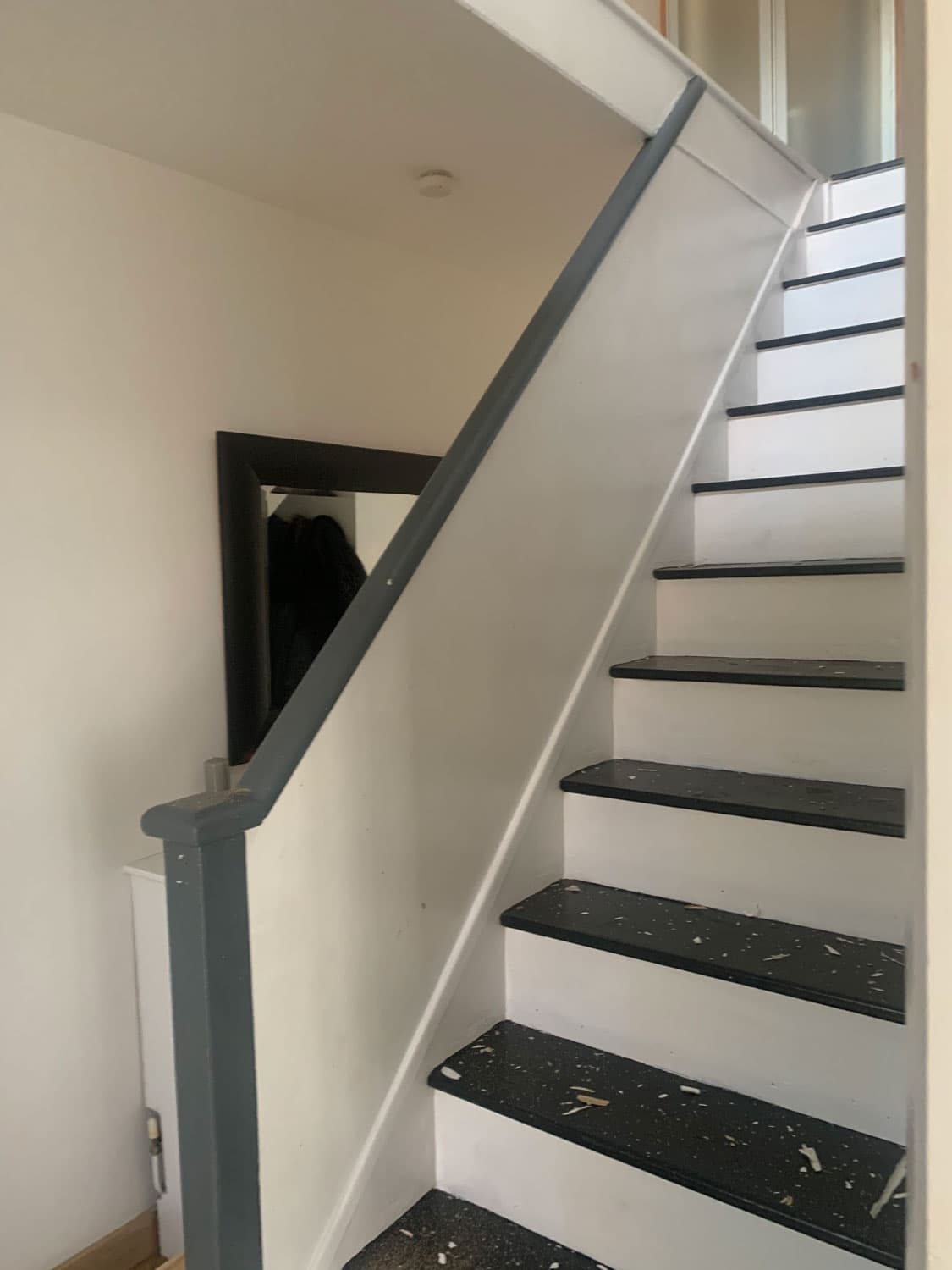
Painted Staircase Renovation
Painted stringers, darker treads, and a cleaner hallway finish for an existing staircase renovation.
Finished
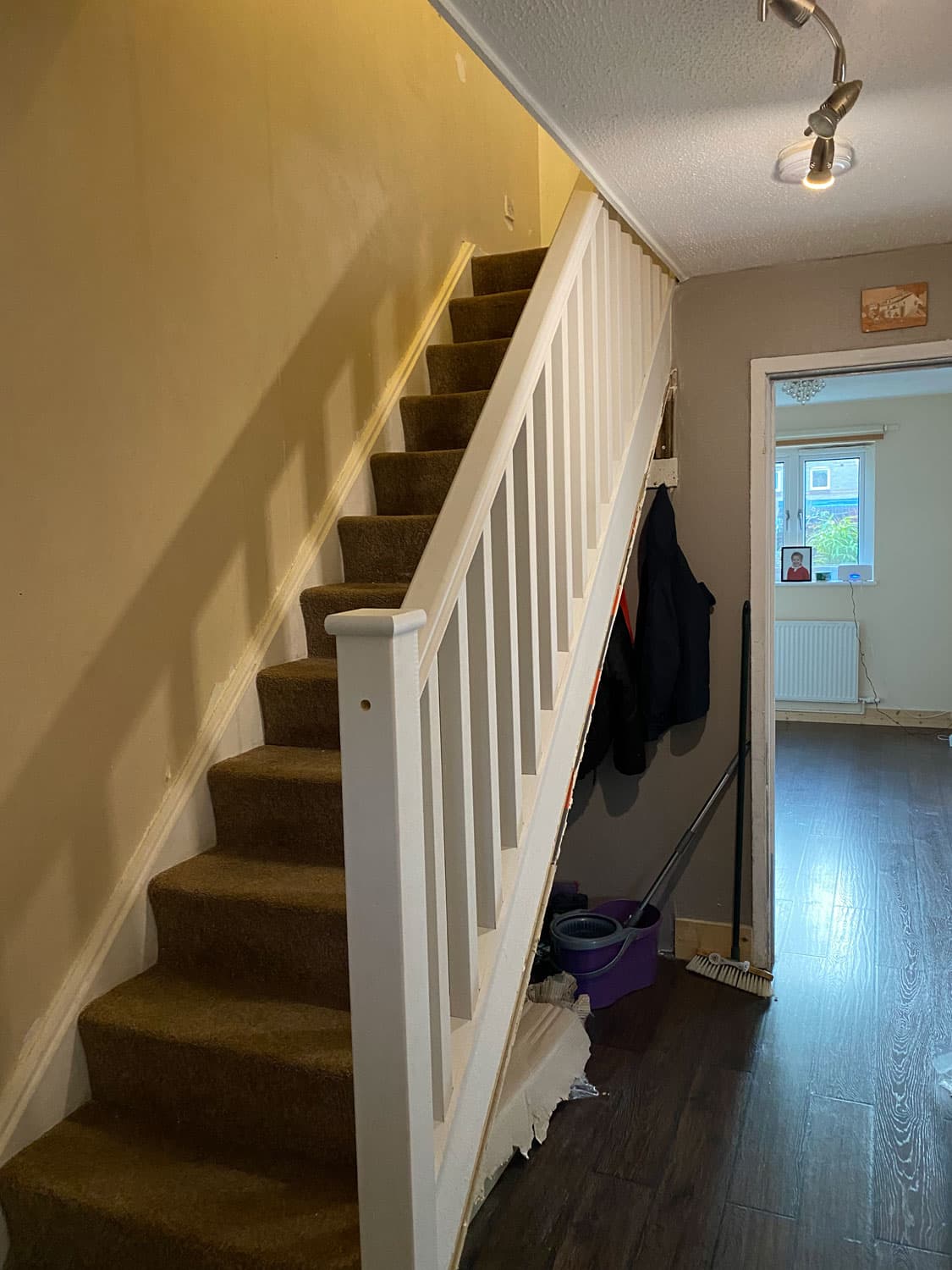
White Spindle Staircase
White spindle balustrade detail with painted stringers and a neat residential hallway finish.
In progress
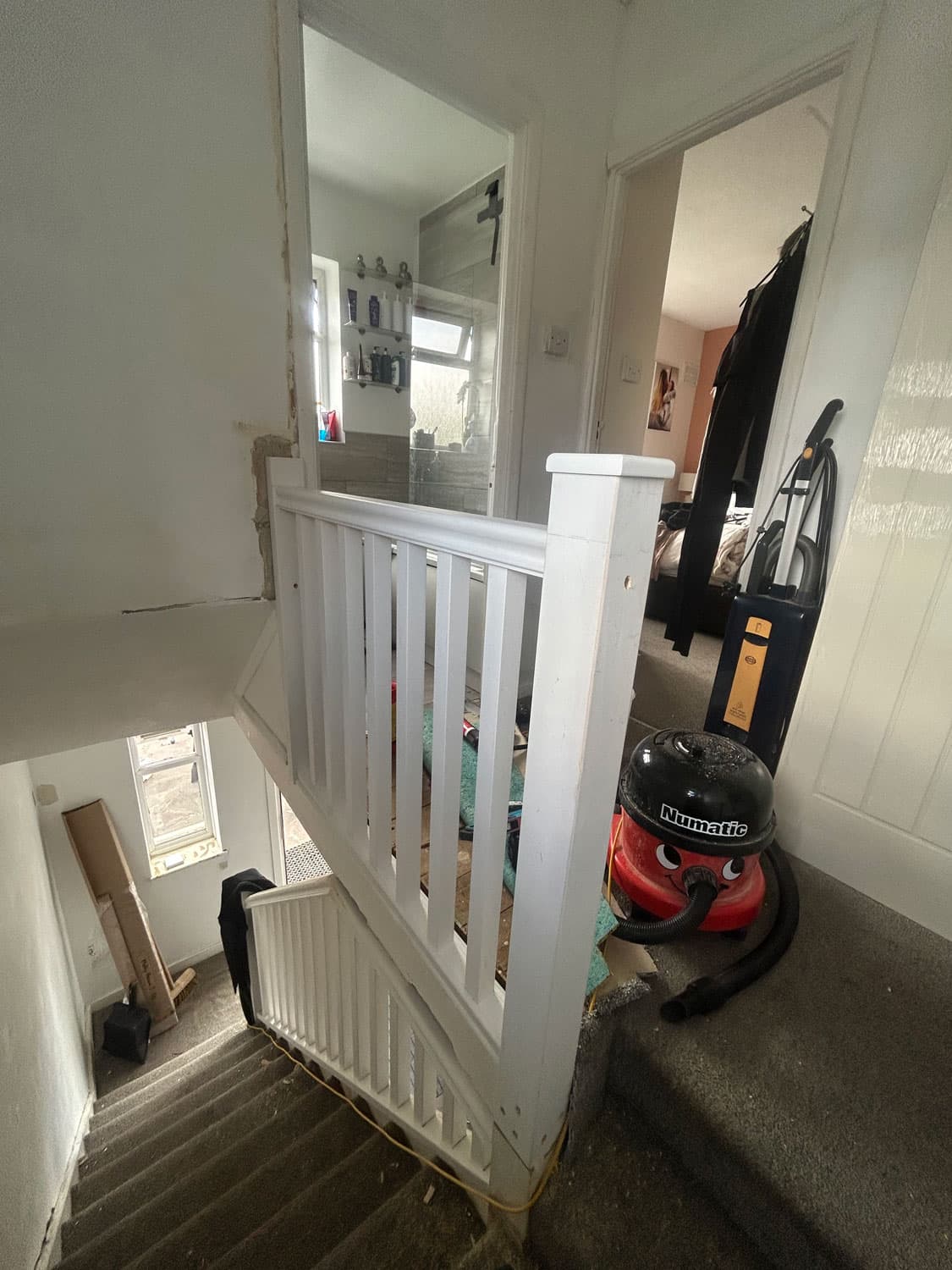
Hallway Balustrade Refurbishment
Balustrade refurbishment showing how stair details can lift the whole hallway.
When renovation makes sense
Staircase renovation is usually the better route when the stairs are fundamentally solid but look tired or no longer match the rest of the home. This might include worn treads, dated spindles, loose handrails, old carpet marks, squeaks, chipped paint, or a finish that feels out of step with new flooring and decoration.
Renovation can include new handrails, spindles, newel details, cladding, repairs, trims, and finishing work. The aim is to improve what is already there without taking on the disruption and cost of a full replacement where it is not needed.
- Replace spindles, handrails, baserails, or newel details.
- Add timber cladding or improve visible treads and risers.
- Repair squeaks, loose sections, or damaged trims where access allows.
When replacement may be needed
Replacement is more likely when the staircase layout is changing, the structure is unsuitable, the pitch is wrong, or the wider renovation needs a new stair design. This can apply during loft conversions, extensions, major hallway changes, or where the existing stairs cannot sensibly support the desired finish.
A new staircase should be planned carefully and, where relevant, checked against building-control and design requirements. Renovation improves an existing staircase. Replacement changes the staircase itself, so the planning burden is higher.
Balustrades, handrails, and visible detail
The balustrade is often what makes the biggest visual difference. New spindles, rails, posts, caps, and trims can change the whole hallway without replacing the full staircase.
The best choice depends on the house. Traditional spindles suit many Hertfordshire homes, while simpler rails and cleaner lines can work better in a more modern interior.
Noise, movement, and repair work
Squeaks and movement should be checked before the finish is chosen. Some issues can be tightened, packed, glued, fixed, or improved as part of a renovation. Other issues may point to deeper structural problems that need a different approach.
This is why the first inspection matters. The quote should separate practical repairs from cosmetic decisions so the staircase is not just made to look better while the underlying problem remains.
How to decide what to quote
Send clear photos from the bottom, top, landing, and side of the staircase. Include close-ups of damaged areas, loose parts, squeaks, exposed treads, handrails, and spindles.
Explain whether you want a cosmetic refresh, a more substantial renovation, or advice on whether replacement is the better route. That makes the first conversation more useful and avoids comparing the wrong options.
Staircase Renovations FAQs
Can an old staircase be made to look modern without replacing it?
Often, yes. If the structure is sound, new rails, spindles, trims, cladding, repairs, and finishing can make a major difference without a full replacement.
Is staircase renovation less disruptive than replacement?
Usually. Renovation normally works with the existing staircase, while replacement can affect access, layout, ordering, and wider building work. The exact disruption depends on the scope.
Should squeaky stairs be fixed before the finish is changed?
Yes. Squeaks, movement, and loose sections should be checked before new finishes are added. Otherwise the staircase may look better while still having the same practical problem.
Related Guides
Local Pages
Staircase Renovations pages for nearby areas
If you are planning this type of work locally, these pages include area-specific quote notes, related services, visual references, and nearby coverage.
Need advice on a real project?
Send the project details and photos, and T Lefort Carpentry will advise on the next step before quoting.